Light Pastel Tiny Polka Dots Nursery Set
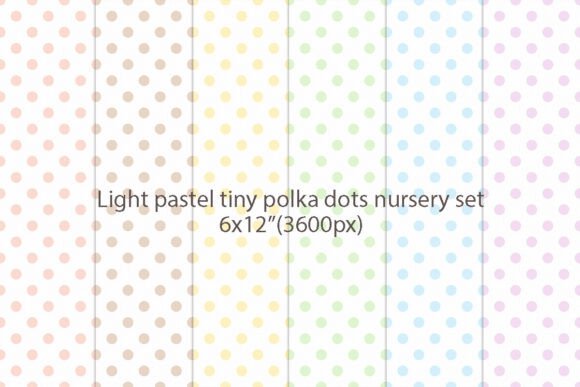
The Light Pastel Tiny Polka Dots Nursery Set is a digitally delivered design asset pack—six high-resolution, seamless pattern files optimized for creative professionals and detail-oriented hobbyists. It’s not a physical product, nor a subscription service, but a focused, production-ready resource: soft-hued, tightly spaced polka dot patterns rendered in light pastel tones (think barely-there mint, whisper-soft peach, cloud-white, pale lavender, sky-blue, and buttery cream), each at 3600 × 3600 px, 300 dpi, in JPG format, delivered as a single ZIP archive.
What Makes This Set Stand Out in Practice?
Unlike many decorative pattern packs that lean into bold contrast or oversized motifs, this set prioritizes subtlety and scale. The “tiny” in its name is literal—the dots are consistently small (roughly 2–4 mm at print size), evenly spaced, and gently textured—not flat vector perfection, but a softly rendered, organic rhythm. That nuance matters: it avoids visual fatigue in large-format applications like wallpaper or nursery wall decals, and translates well across both analog and digital workflows.
Each of the six files represents a distinct pastel base with matching dot tone—no clashing contrasts or unintended chromatic tension. That consistency supports cohesive branding or themed projects without requiring manual color correction. For example, a small-batch stationery designer can use one file for baby shower invitations, another for gift tags, and a third for lining envelopes—all maintaining tonal harmony without needing to adjust saturation or brightness between assets.
Real-World Usability Across Mediums
In physical applications, the resolution and dimension support crisp printing up to 12" × 12" at full size, and scalable tiling beyond that. Users report successful results on cotton fabric prints (for custom swaddles or crib sheets), kraft paper wrapping (especially for boutique baby gift boxes), and matte-finish wallpaper panels applied via peel-and-stick substrates. One educator repurposed three patterns as printable classroom decor—labeling bins for sensory materials with corresponding pastel dots, reinforcing visual sorting while keeping the environment calm and intentional.
Digitally, the files perform reliably in layered design environments. They hold up under moderate opacity adjustments in Photoshop or Affinity Designer, retain clarity when resized down for social media story templates or email headers, and integrate cleanly into Canva layouts without pixelation or banding. A freelance scrapbook designer noted they work especially well as background layers beneath handwritten journaling or photo clusters—adding texture without competing for attention.
Strengths Beyond Aesthetics
- Workflow efficiency: No need to build repeat patterns from scratch or wrestle with seamless tile settings—each file is pre-tested for edge alignment and visual continuity.
- Color reliability: RGB and CMYK output remain stable across calibrated monitors and standard inkjet/laser printers; no unexpected shifts toward yellow or gray when printed on uncoated stock.
- Format pragmatism: JPG delivery keeps file sizes manageable (average 8–12 MB per image) and ensures broad software compatibility—even older versions of Illustrator accept them as linked or embedded raster assets.
- Licensing clarity: While license terms depend on the vendor, most reputable sources grant extended commercial rights for physical and digital end products—meaning you can sell items made using these patterns without additional royalties.
Who Benefits Most—and When?
This set serves creators whose work balances aesthetic intention with functional constraints. Small business owners launching a line of organic cotton baby blankets benefit from the gentle, non-distracting texture—parents frequently cite “calm visual weight” as a key purchase factor. Bloggers documenting nursery makeovers appreciate how the patterns photograph consistently under natural light, avoiding glare or moiré that plagues high-contrast prints.
Freelance marketers building email campaigns for maternity brands find the palette aligns well with current wellness-aligned visual trends—soft but not saccharine, gender-neutral without being austere. Educators designing inclusive early-learning materials use the patterns to create tactile sorting cards or laminated visual schedules where color differentiation supports neurodiverse learners without overstimulation.
It’s less suited for projects demanding extreme scalability (e.g., billboard-sized murals), intricate vector manipulation (like isolating individual dots for animation), or strict Pantone-matching requirements. If your workflow relies heavily on SVG-based systems or requires transparent backgrounds, you’ll need to convert or layer manually—JPGs don’t include alpha channels.
Practical Integration Tips
Start by testing one pattern at actual print size on your intended substrate—paper stock, fabric type, or wall material—before committing to bulk production. Subtle variations in absorbency or sheen can affect perceived contrast. For digital scrapbooking or junk journaling, try overlaying a low-opacity white noise layer (5–10%) atop the pattern to soften edges further and enhance tactile illusion.
When pairing with typography, use fonts with open counters and generous letter spacing—tight sans-serifs or delicate serifs complement the pattern’s quiet rhythm better than heavy display faces. Avoid placing large blocks of dark text directly over the dots; instead, use subtle drop shadows or light-colored text boxes with 90% opacity to maintain legibility without breaking the mood.
If sourcing for client work, clarify usage scope upfront: while the set permits derivative physical products, it doesn’t cover resale of the raw files themselves or use in SaaS templates where end users could extract and redistribute the patterns. Review the specific license before embedding into editable digital kits.
A Resource That Supports Intentional Creation
The Light Pastel Tiny Polka Dots Nursery Set succeeds not because it’s novel or flashy, but because it fulfills a narrow, repeated need with precision: delivering predictable, printable, harmonious texture on demand. It reduces decision fatigue during early-stage design phases and holds up under iterative refinement—whether you’re mocking up a new line of organic baby wipes packaging or assembling a digital workshop handout for new parents.
Its value lies in reliability, not reinvention. For professionals who prioritize consistency across touchpoints—and who understand that restraint, when executed well, often communicates more than complexity—it’s a quietly effective tool. Used deliberately, it supports calm, considered outcomes. Used carelessly, it risks blending into the background entirely. That balance isn’t a flaw—it’s a feature aligned with its intended purpose.