Bird Berries Seamless Patterns Pack
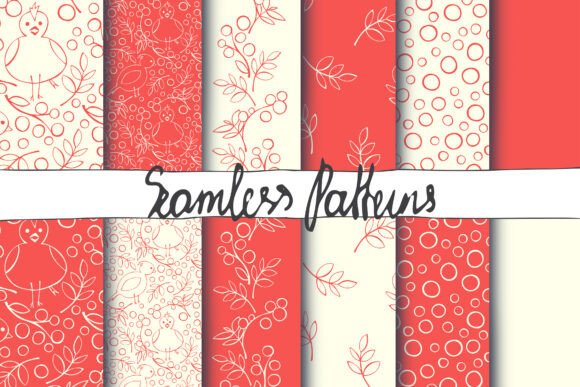
The Bird Berries Seamless Patterns Pack is a curated ZIP file containing 12 hand-drawn, cartoon-style seamless patterns—each delivered as a high-resolution JPG at 12×12 inches (3600×3600 px) and 300 dpi. It’s not just decorative filler; it’s a production-ready asset designed to slot into real-world creative workflows where consistency, scalability, and visual warmth matter.
These patterns sit between concept and execution: they’re finished enough to drop in and use immediately, yet flexible enough to adapt across mediums, audiences, and timelines. Whether you're designing product packaging for a small-batch jam brand, preparing slide decks for an elementary education workshop, or building social media templates for a lifestyle blog, the Bird Berries Seamless Patterns Pack serves as a tactile, cohesive visual anchor—no design degree required.
Where It Fits in Your Workflow
Unlike generic stock assets, these patterns are built with intentionality—not just aesthetics. Each one repeats cleanly without visible seams, eliminating hours of manual tiling or troubleshooting in Photoshop or Illustrator. That means you can use them before finalizing layouts (as background guides for grid alignment), during active design (as layered textures behind typography or icons), or after core content is locked (to unify a multi-page report, printable planner, or merch mockup).
For example, a freelance educator creating downloadable classroom resources might begin by selecting two complementary patterns—one for headers, another for section dividers—then apply them across Canva templates before exporting PDFs. A small business owner launching a new line of eco-friendly stationery could test all 12 patterns against paper swatches and ink samples early in prototyping, then commit to three that hold up best under print conditions.
Compatibility and Practical Integration
All 12 patterns are delivered as JPG files—universally supported across design tools (Adobe Creative Cloud, Affinity Suite, Figma via plugins, Canva, Procreate), publishing platforms (InDesign, Pages, Google Docs via image insertion), and even presentation software like PowerPoint or Keynote. No fonts, layers, or proprietary formats to manage. Just drag, resize, and repeat.
Because each file is 3600×3600 px at 300 dpi, they scale cleanly from business card backgrounds to wall-sized posters—no pixelation or interpolation artifacts. If you’re working in vector-based tools, you can place the JPG as a pattern fill or embed it directly into a clipping mask. For web use, you can downsample selectively (e.g., 1200×1200 px at 72 dpi) without losing recognizability—ideal for email headers, blog banners, or Shopify store accents.
They also pair naturally with other assets: pair a berry-and-feather motif with hand-lettered fonts for greeting cards; layer a subtle bird silhouette pattern beneath transparent SVG icons in a dashboard UI; or use one as a consistent texture across a set of Instagram Story templates. The cartoon style avoids clinical rigidity—it feels approachable but not childish, playful but not unprofessional.
Preparation and Organization
Before opening the ZIP, take five minutes to rename and sort. Create a dedicated folder—“Bird Berries – Patterns”—and label each file clearly: BirdBerries_SparrowStripe_300dpi.jpg, BirdBerries_BlueberrySwirl_300dpi.jpg, etc. This pays off later when searching across dozens of projects or sharing assets with a team.
Consider building a quick reference sheet: open each pattern in Preview or Quick Look, note its dominant color temperature (cool vs. warm), density (sparse birds vs. tight berry clusters), and rhythm (linear, circular, or organic flow). You’ll start recognizing which ones work best for specific uses—e.g., low-contrast, airy patterns for text-heavy slides; bolder, higher-contrast ones for product labels needing shelf impact.
Efficiency and Quality Control
Seamless doesn’t mean invisible. With hand-drawn patterns, slight variations in line weight or spacing add character—but they also require checking. Before committing to print or mass distribution, zoom in to 200% on a corner where tiles meet. Confirm no stray marks, inconsistent overlaps, or unintended gaps appear at the edges. All 12 patterns in the Bird Berries Seamless Patterns Pack have been tested for true seamlessness, but your output device (printer, screen, fabric printer) may render fine details differently.
If you’re batch-applying patterns across multiple files—say, generating 50 social posts—you’ll save time by creating a reusable template. In Photoshop, build a smart object with the pattern as a fill layer, masked to your layout. In Canva, upload one pattern, duplicate the page, then swap only the foreground elements. This maintains visual continuity while cutting repetitive steps.
Long-Term Use and Consistency
Think of this pack as part of your visual vocabulary—not a one-off purchase. Over six months, you’ll notice which patterns resonate most with your audience or brand voice. Maybe RobinNestDots becomes your go-to for client proposal covers, while BlackberryVine anchors your seasonal newsletter series. That kind of repetition builds recognition without monotony.
To extend longevity, avoid overusing any single pattern in isolation. Instead, combine two at low opacity (e.g., 15–25%) for depth—a technique especially effective in printed materials where ink absorption can mute flat fills. Or invert one pattern to create a dark-mode version for digital presentations.
Real-World Implementation Examples
- Bloggers & Content Creators: Apply a light berry-pattern overlay behind featured quote graphics. The texture adds dimension without competing with text—and because it’s seamless, it scales perfectly across desktop, tablet, and mobile preview sizes.
- Educators & Trainers: Use a bird-themed pattern as the base for printable behavior charts or habit trackers. Kids respond to friendly illustration, and teachers appreciate that the same file works for laminated classroom posters and digital assignments in Google Classroom.
- Small Business Owners: Print one pattern on kraft paper tags for handmade goods, then reuse the same file digitally for Etsy listing banners. Consistency across physical and online touchpoints reinforces brand cohesion with zero extra design labor.
- Freelance Designers: Include one Bird Berries pattern in your standard presentation deck template for client pitches. It signals attention to detail and aesthetic cohesion—subtly reinforcing your value before you’ve even discussed scope or timeline.
What Makes These Patterns Work Beyond Aesthetics
It’s not just about “cute birds and berries.” The hand-drawn quality introduces gentle imperfection—lines taper slightly, berries vary in size, feathers overlap organically. That human touch translates to perceived authenticity, especially in spaces saturated with AI-generated or overly polished visuals.
Cartoon style also carries functional advantages: it reads clearly at small sizes (unlike photorealistic textures), conveys friendliness without sacrificing professionalism, and adapts across age groups—from preschool learning apps to millennial-targeted wellness brands. And because all 12 share a unified palette and linework language, mixing them feels intentional, not random.
You don’t need to use all 12 at once—or even all in one year. Start with three that match your current project’s tone. Save the rest. Revisit them quarterly. Let them evolve with your work, not dictate it.
Final Integration Tip
Add the Bird Berries Seamless Patterns Pack to your asset management routine. If you use cloud storage, tag the folder with keywords like “seamless,” “cartoon,” “print-ready,” and “hand-drawn.” If you maintain a local digital asset library, include a README.txt noting file specs, usage rights (check license terms—typically for commercial use with attribution optional), and one sentence per pattern describing its best-fit use case. That way, six months from now, you’ll spend seconds—not minutes—finding exactly what you need.
This isn’t about adding more to your plate. It’s about reducing friction where visual consistency matters—so you spend less time adjusting tiles and more time delivering work that connects.